In our everyday lives, communication is simple and personal.
We reach for our phones to send messages, make direct calls, browse the web, check emails, or quickly log into our bank accounts. We use apps to stay connected with friends, family, and colleagues—whenever and wherever it suits us.
In an emergency scenario, multiple responders arrive within minutes—firefighters, police officers, medical teams—each with a specific role to play, their success dependent upon the others. Decisions must be made quickly. Information must be shared instantly. Coordination is everything.
The stakes grow higher when communication is cross-border and first responders working together come from different countries.
Public safety operations rely on a structured command system. Commanders and responders communicate using voice, data, and video within carefully organized communication groups, tailored to their responsibilities and the situation at hand.
This is how complex communication can be during an emergency situation
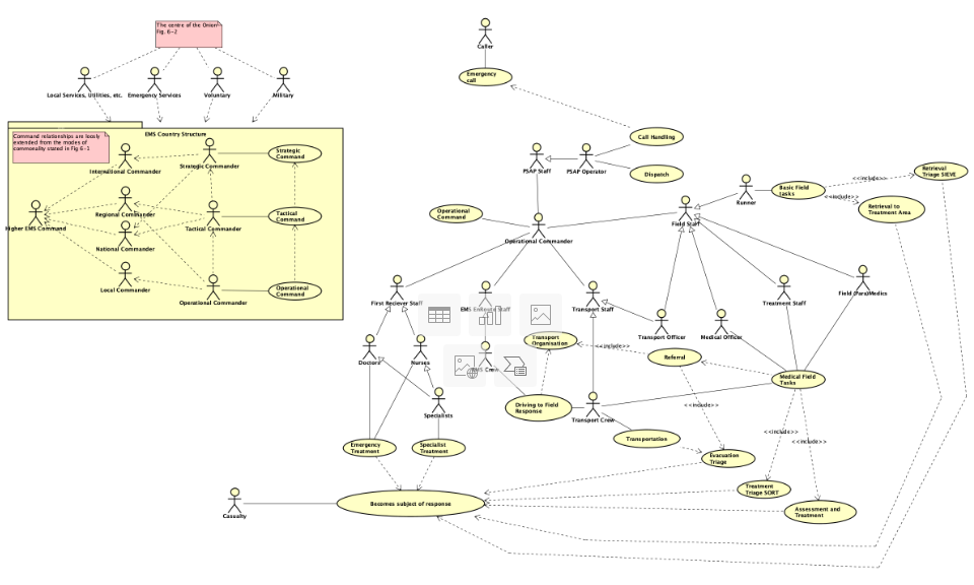
Cross-border operations are often faced by several layers of complexities: from communication and language barriers, overlapping or unclear command structures, differing laws and regulations, and training and procedural differences – all factors that can slow coordination and reduce the effectiveness of cross-border emergency responses.
EUCCS Preparation complements the technical components of its activities by systematically integrating the perspectives of field actors, particularly first responders, into its processes. Establishing continuous communication channels and structured feedback loops with practitioners and end users is essential to developing a comprehensive repository of recommendations. These recommendations will directly inform the development and refinement of Standard Operating Procedures (SOPs), which are systematically applied during emergency response operations.
The SOPs and the technology are not developed in parallel; they shape each other. How responders operate in the field defines what the tools must do, and how the tools evolve redefines how responders can operate.
When responders from different agencies or different countries work together, the greatest risk is not technical failure, it is the absence of shared understanding. SOPs establish a common language, define who is in command, and set the rules of communication before an incident begins, ensuring that when the moment comes, every team operates from the same page.
SOPs for the EUCCS must incorporate procedures at both regional and EU levels. The work conducted within EUCCS Prep and the recommendations from there will ensure alignment between the operational needs of the first responders and the current technological capabilities
Within EUCCS Preparation, the Operational Procedures Team (OPT) is led by the Bavarian Red Cross. The OPT convenes regularly to review, refine, and prioritize cross-border and cross-agency operating procedures, use cases, and related end-user requirements, ensuring that operational realities remain central to project development.
In addition to the core team made of project partners, the OPT enlists the support of practitioners from all across Europe to ensure the results are representative of and speak to the diversity the EUCCS must serve.
The Operational Procedures Team (OPT) is a critical component of the EUCCS development process, involving first responders from across Europe.
The OPT ensures that EUCCS is operationally usable, relevant, and beneficial to those on the front lines. Rather than relying solely on technical or policy design, the OPT brings the perspective of real-world users into the development process.
The OPT ensures that EUCCS is not just technologically functional, but operationally trusted. Their engagement will:
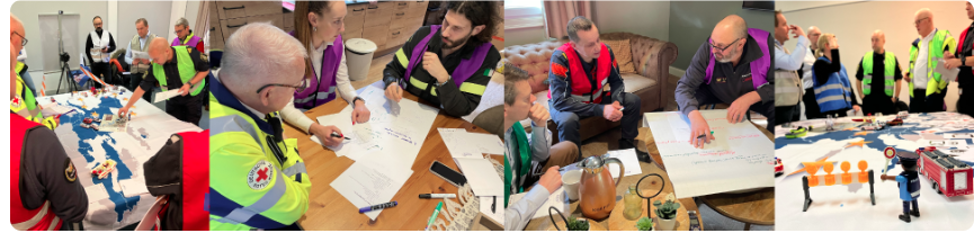
Table-top exercises and workshops are organised to elaborate the current problems of communication in cross-border response as well as the ideal vision for what cross-border communication and related operational procedures should be in the future. In addition, they were designed to explore how MCX technologies could create beneficial change in collaboration and communication. Table top play was without technology in order to establish the necessary foundation for learning and evaluation.
The aim was to understand: